What Is Product Development, and How Does It Work?
Product development starts with picking the right problem and being honest about scope, not writing code. Four stages, from discovery to scaling.
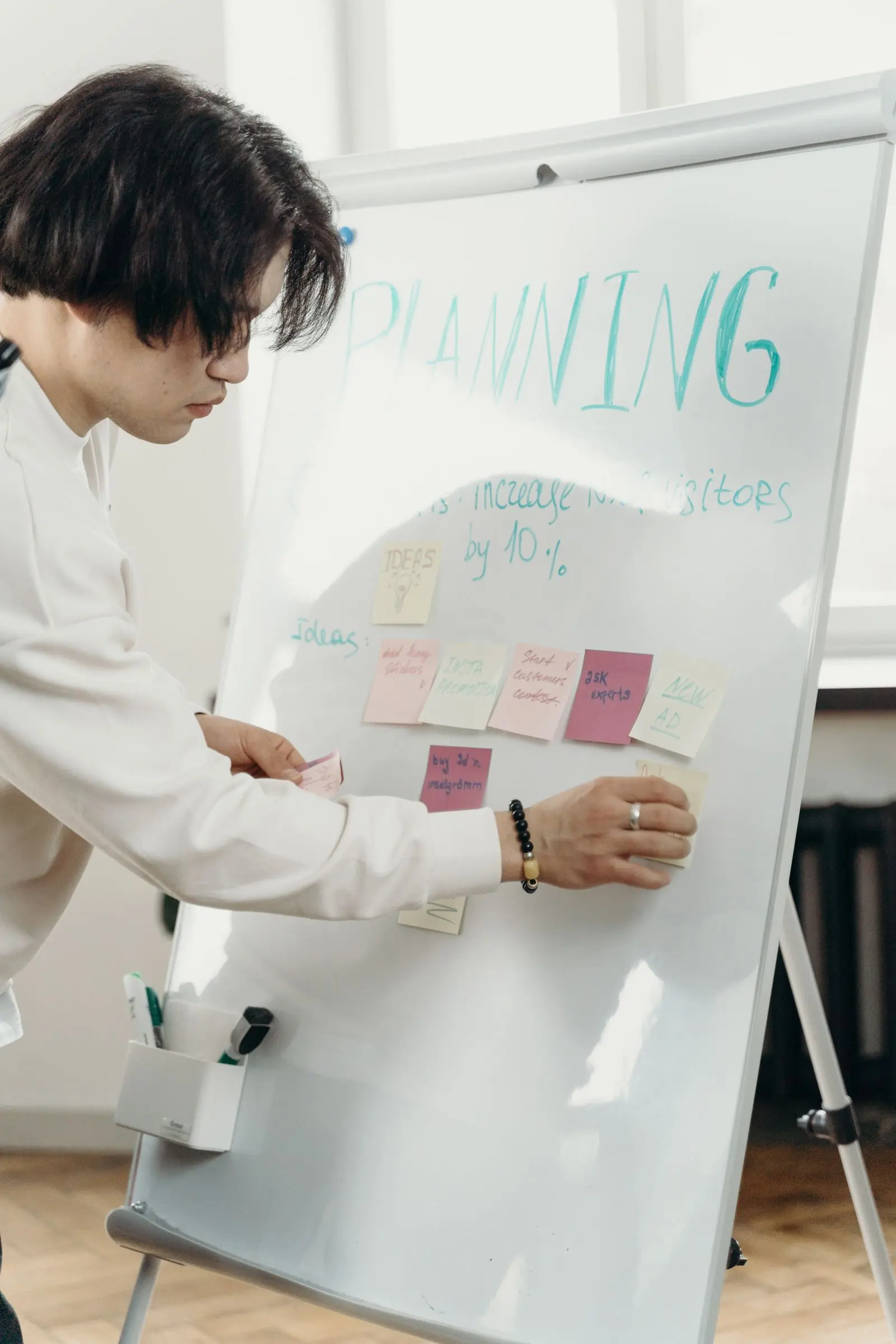

In short: product development is the work that carries a digital product from idea to live release, with design and engineering staying on the same team the whole way through. The job isn't writing code, it's picking the right problem, being honest about scope, and building an architecture that can keep evolving after the first release. DORA's (Google Cloud) 2024 State of DevOps report found that elite-performing engineering teams deploy 182 times more often than low performers, with an 8x lower change failure rate — frequent, small releases beat rare, large ones.
What Is Product Development?
Product development is the end-to-end work that turns an idea into a usable digital product: discovery, design, engineering, and post-launch scaling all sit with the same team. The question it answers isn't "which technology should we use," it's "which problem, with what scope, in what order."
What keeps a digital product alive isn't code alone. Picking the right problem, being honest about scope, and being able to keep developing after the first release matter just as much. That's why design and engineering making decisions at the same table matters: a design that progresses on its own, handed off to engineering afterward, usually turns into something that has to be rebuilt.
That also explains why most organizations get the order wrong from the start. First, a design agency delivers screen mockups; then those mockups get handed to a software team with "build this." What gets lost in that handoff is the technical constraints — nobody discussed where the data will actually come from, what counts as an empty state, what counts as an error state, while the screens were being drawn. The result is an interface redesigned mid-build, or a date that slips in the first week of the schedule.
What It Covers, and What It Doesn't
Product development covers:
- Product discovery and planning — clarifying business goals, user needs, and technical constraints, and turning the idea into an actionable product plan
- Web application development — building custom web products end to end, with front end, back end, and system architecture as one piece
- Mobile app development — including managing the App Store and Google Play release process from end to end
- Product scaling and evolution — keeping the architecture, performance, and delivery process ready to grow after launch
What's deliberately left out matters too: the service doesn't end with a design file or a technical spec. Source code, design files, and infrastructure accounts get opened under your organization's own name; what gets delivered is a working, handoff-ready product, not a document.
How the Service Works
The process runs in four stages.
- Product call (45 minutes). The idea, the target user, and how success will be measured. The output is a clear problem and target user, plus a rough scope for the first release.
- Discovery and planning (1-2 weeks). Stakeholder interviews, user needs, and technical constraints turn the idea into an actionable product plan: a prioritized feature list, plus architecture and technology decisions.
- Design and development (6-14 weeks). Design and engineering move together on the same team; you see a working release every two weeks. Front end, back end, and architecture are built as one piece.
- Scaling and evolution (ongoing). After launch, the product develops based on usage data; architecture and the delivery process stay ready to grow.
A narrowly-scoped first release typically goes live in 6-14 weeks. You can start even if the idea isn't fully clear yet — that's exactly what the discovery stage is for. The four stages run in sequence, not in parallel: starting to build before discovery is done means building the architecture on top of scope that hasn't been fixed yet, and that foundation usually has to be rewritten midway through development.
Why Frequent, Small Releases Beat Rare, Large Ones
"A working release every two weeks" isn't a stylistic habit — two separate pieces of data confirm the same principle from different angles.
DORA's 2024 State of DevOps report found that elite-performing teams can deploy on demand, multiple times a day, keeping change failure rates around 5%. The gap with low-performing teams is 182x — large, rare releases don't reduce risk, small and frequent ones do. That's the logic behind shipping a working release every two weeks: when each release is small, finding out what went wrong, if something does, stays easy too.
That principle doesn't just shape the development process, it shapes the live product itself. Portent's analysis of over 100 million page views found that an e-commerce site loading in 1 second converts at 2.5 times the rate of one loading in 5 seconds. The cost of getting an architecture decision right early is low; the cost of finding out late is high — which is exactly why design and engineering need to be one continuous piece of work, not two separate deliveries.
Web, Mobile, or Both?
This is a choice that depends on the nature of the product, and it usually comes before any technology preference. We covered a five-question filter for the timing, notification needs, and offline requirements in a separate post: web or mobile, the right choice. Most enterprise products need both together: web for internal use, mobile for field teams — product development builds both sides on the same architecture, with the same team.
What It Gets You
The service's output isn't a technical spec, it's three measurable things.
An honest scope. The first release fully delivers the flow that proves the product's reason to exist; everything else goes into a written "next release" list.
An architecture ready to grow. Design and engineering moving on the same team means the first release doesn't block the second one.
A product you can hand off. Source code, design files, and infrastructure accounts get opened under your organization's own name; once the engagement ends, what you're left with isn't a document, it's a product your own team can maintain.
All three of these become visible not before launch but in the three months after it: narrow scope shows up in the first release, architecture quality in the second and third, and handoff-readiness gets tested whenever the team changes or grows.
Which Engagement Model Should You Use?
How the product development service is built is one question; which contract structure you run it under is a separate one. If you want to prove an idea as fast as possible, have a single bounded piece of work, or need a permanent team for a product that keeps growing, we compared the three models in a separate post: MVP Fast-Track, On-Demand, or Dedicated Team?
Frequently Asked Questions
Our idea isn't fully clear yet — can we still start? Yes. The discovery stage exists exactly for this: it clarifies the goals, the user, and the technical constraints, and turns the idea into a measurable product plan.
How large is the team we'll work with? Once scope is set, you typically work with one product lead, one designer, and one or two developers. Team size shifts with the stage of the project and the breadth of the scope.
Who owns the code and design files? You do, entirely. Source code, design files, and infrastructure accounts get opened and handed over under your organization's own name.
Can you take over an existing product? Yes. The codebase and architecture get reviewed first, with risks and an improvement plan reported back; scaling work follows from there. A takeover always starts with a review stage, not straight into development.
Sources
- DORA (Google Cloud), Accelerate State of DevOps Report 2024 — elite-performing teams deploy on demand with a change failure rate around 5%; the deployment-frequency gap with low-performing teams is 182x.
- Portent, Site Speed is (Still) Impacting Your Conversion Rate — in an analysis of over 100 million page views, an e-commerce site loading in 1 second converts at 2.5 times the rate of one loading in 5 seconds.
Closing
Product development starts with picking the right problem and the right scope, not with picking a technology. Design and engineering moving on the same team is what lets a first release ship fast without blocking the second one — the result is a way of working that continues with the same discipline as the product grows, not a project that ends on launch day.
Look at our product development service or book a product call directly.
Let's find out where your organization stands
In a free 30-minute discovery call, we'll talk through your current state and the right first move.
Book a Call